URBACT University 2026: Learning, Playing and Co-Creating Better Cities in Cork
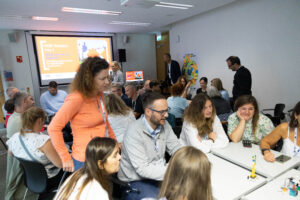
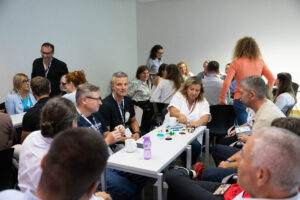
Three days in Cork, 25-27/8/2026. Three mobility networks. A room full of passionate city practitioners. Lots of movement, conversations, laughter, networking and quite a few LEGO bricks.
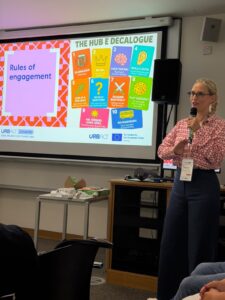
In August 2026, URBAN SPARK Consulting had the opportunity to contribute to URBACT University 2026 in Cork, with Io Chatzivaryti serving as Hub Manager of Hub E in Mobility.
The Mobility Hub brought together participants from three URBACT Transfer Networks: Smart Mobility on Demand, Comings and Goings, and CALL – Accessible Cities for All, where Io also serves as Lead Expert.
The three-day experience was built around a fundamental question for cities: How do we move from simply identifying stakeholders to genuinely engaging them in shaping local change?
Rather than treating participation as a formal consultation exercise, the Hub explored stakeholder engagement as a process of understanding people, building relationships, discovering shared motivations and ultimately creating the conditions for co-design and experimentation. The learning journey deliberately became progressively more participatory and playful as the three days unfolded.
Day 1 – Who is missing?
The first day focused on looking beyond the “usual suspects”.
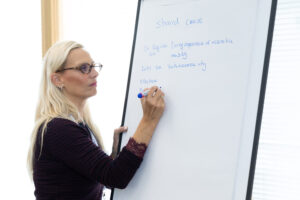
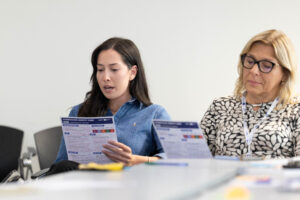
Participants explored blind spots in stakeholder mapping and reflected on who may be missing from local conversations. Using tools including the Quintuple Helix, Stakeholder ID Card and empathy-based approaches, they were encouraged to look beyond organisations and institutional titles and consider the actual people behind them: their motivations, interests and possible barriers to participation.
The Stakeholder ID Card proved particularly effective in encouraging participants to reconsider how they perceive stakeholders and to question some of the assumptions that can unconsciously shape stakeholder mapping.
The question was simple but important:
Are all the voices that need to be heard actually around our table?
Day 2 – What moves them?
On the second day, the focus shifted from who stakeholders are to what motivates them.
Participants explored the interests, values, fears, skills and resources that influence why people engage — and, crucially, why they continue to engage.
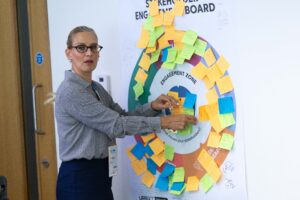
Through Head–Heart–Hands, storytelling, stakeholder role-playing and shared reflection, the group explored how individual motivations can become a collective narrative and ultimately a shared “Story of Us.”
The transformation in the room was already visible. Participants moved beyond formal project discussions, stepped into different stakeholder roles and began connecting through personal experiences and shared purpose.
This reflected an important principle behind the Hub: meaningful participation does not happen simply because we invite people into a meeting. We need to understand what gives them a reason to be there.
Day 3 – What can we do together?
The final day moved from understanding and motivation towards action.
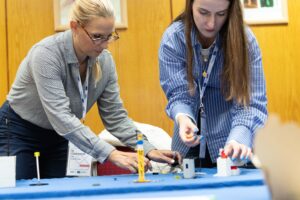
Participants explored Testing Actions as opportunities for cities and stakeholders to co-design, experiment, learn and adapt together.
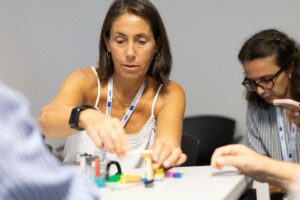
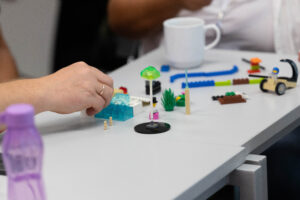
And then came LEGO.
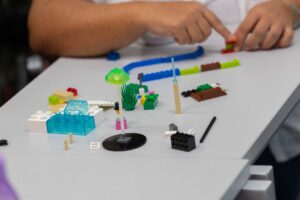
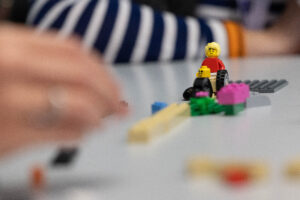
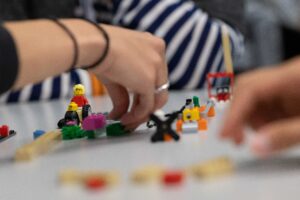
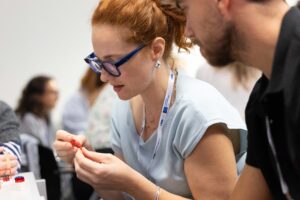
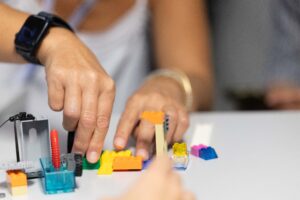
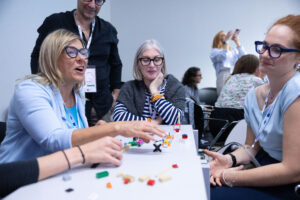
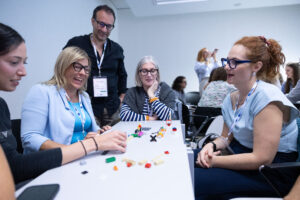
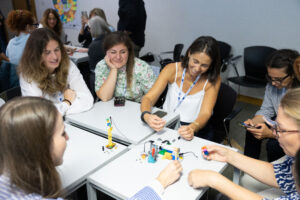
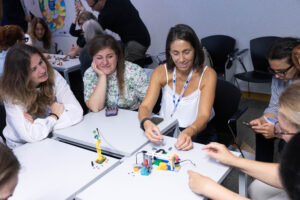
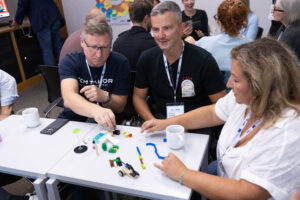
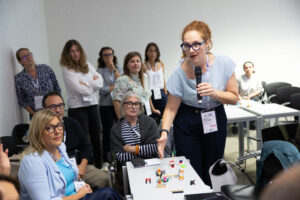
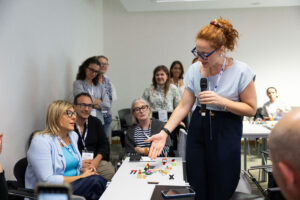
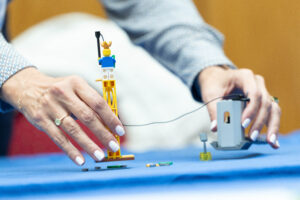
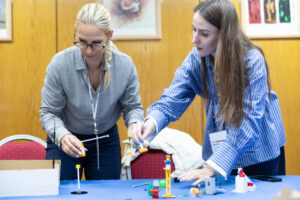
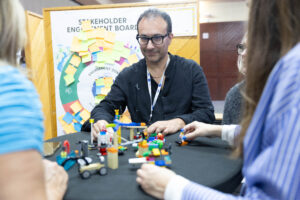
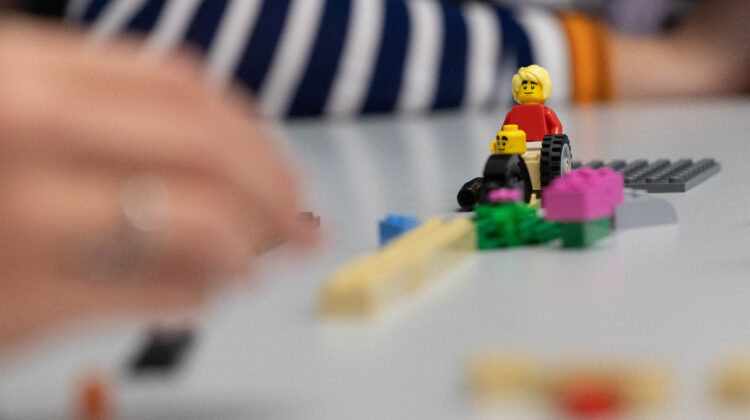
As an additional creative contribution to the Hub programme, Io introduced a LEGO challenge, mixing participants from the three networks and inviting them to collectively:
Build a city of the future that works for everyone.
What began as a playful icebreaker quickly became an exercise in inclusive urban co-creation.
Participants had to negotiate priorities, combine different perspectives and translate concepts such as accessibility, mobility, public space and inclusion into one collective construction.
The exercise created a highly positive and creative dynamic and offered a tangible example of how play can be used within stakeholder processes to make participation more accessible, creative and enjoyable.
Serious challenges, playful methods
For URBAN SPARK, this was perhaps one of the strongest lessons from Cork.
Serious urban challenges do not always require serious-looking methods.
Stakeholder engagement does not always need another formal consultation, presentation or meeting. Sometimes people need to move, role-play, tell stories, build, experiment and even laugh together before genuine collaboration can emerge.
This is particularly relevant when working towards more inclusive cities. If we want to understand different experiences of the city, identify missing voices and create solutions that respond to real needs, participation itself must become more accessible.
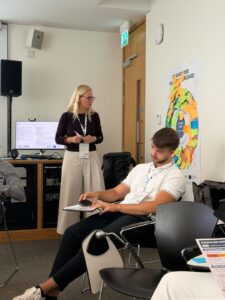
The three days demonstrated the value of learning by doing. Participants did not simply hear about stakeholder engagement methodologies; they experienced them, tested them and considered how they could transfer them to their own URBACT Local Groups and local contexts.
They also brought their own city experiences into the conversation. Practices including Pentágono Urbano’s Learning Labs, Komotini’s ARMS application for accessible mobility and Cluj’s mobility-on-demand experience generated particularly strong interest because they connected the methodology with tangible urban action.
What we brought back from Cork
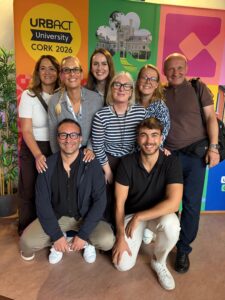
Beyond the tools and methodologies, URBACT University was about people and connections.
Over three days, the atmosphere within the Mobility Hub evolved from initial reserve to experimentation, networking and ultimately genuine co-creation.
For URBAN SPARK, the experience also reflects the kind of work we believe in: participatory, practical, inclusive and creative approaches to urban development that place people at the centre of change.
Cities are not transformed by methodologies alone. They are transformed when people feel that they have a place in the conversation, a purpose in the process and something meaningful to contribute.
And sometimes, that contribution can begin with something as small as a LEGO brick.